Beyond the Frontiers: Why Ownership, Networks, and Values Will Shape the Next Era of Development
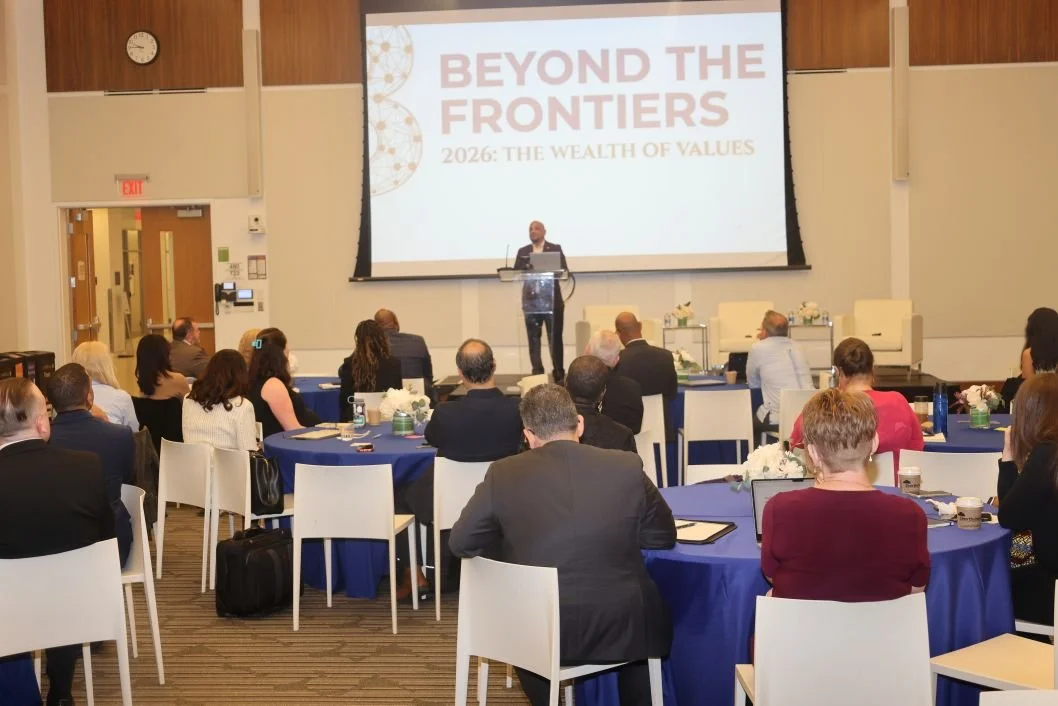
Dr. Ken Harris, President and CEO of the National Business League, delivers a compelling reflection on one of the most enduring questions in global development: what truly creates sustainable economic power?
At Beyond the Frontiers 2026: The Wealth of Values Conference, Dr. Ken Harris, President and CEO of the National Business League, delivered a compelling reflection on one of the most enduring questions in global development: what truly creates sustainable economic power?
His answer was clear.
Not aid alone. Not participation alone. But ownership, institutions, and networks.
Drawing on the legacy of Booker T. Washington, Dr. Harris reminded participants that the struggle for economic independence has always centered on building systems that communities themselves control.
In 1900, Washington founded the National Business League in Tuskegee, Alabama, to organize Black entrepreneurs, farmers, and manufacturers at a time when access to capital, markets, and education was severely limited. The goal was ambitious: create an ecosystem of enterprise that could generate economic independence.
What emerged became known as the Tuskegee economic network, sometimes called the “Tuskegee Machine” — a coordinated system of entrepreneurs, financial institutions, and civic leaders working together to build prosperity.
Remarkably, this network existed long before the digital tools that make connectivity possible today.
“They built an economic ecosystem without the internet, without cell phones, without formal connectivity,” Dr. Harris noted. “And yet they achieved extraordinary results.”
The lesson is clear: technology can accelerate opportunity, but institutions and networks are what sustain it.
The new economic frontier
Dr. Harris argued that the nature of economic frontiers has fundamentally changed.
Historically, frontiers were defined by geography, unexplored land, new trade routes, emerging markets. Today, the frontier is something different.
“The frontier is access to opportunity.” Access to capital. Access to digital infrastructure. Access to global markets. Access to networks of trust.
In this new environment, economic sovereignty becomes a central concern. Sovereignty is not simply about participating in global markets; it is about controlling the systems that shape economic outcomes.
That includes ownership of:
businesses
supply chains
intellectual property
data
digital platforms
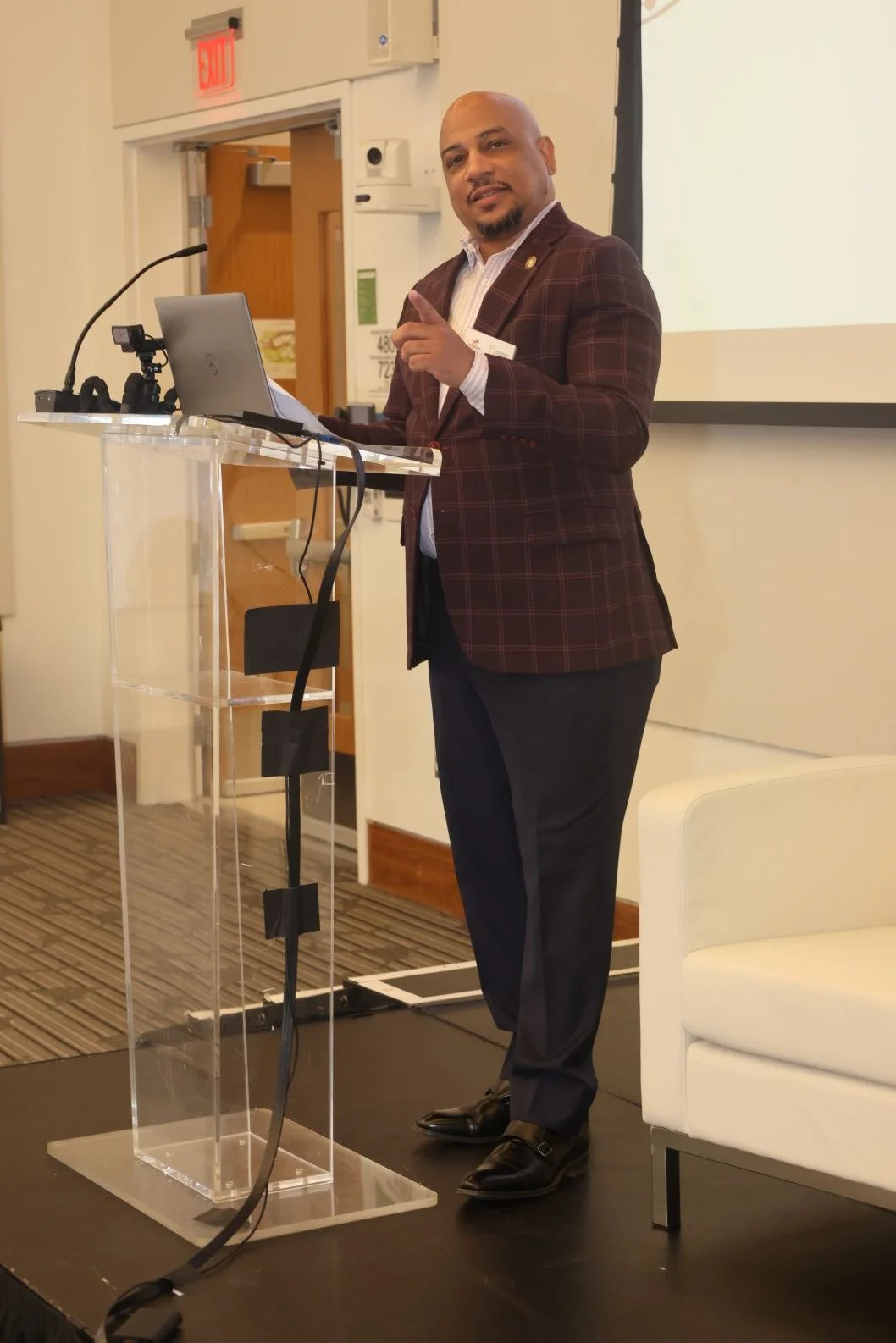
Participation without ownership, Dr. Harris argued, creates dependency rather than prosperity.
“Participation without ownership creates no lasting prosperity. Participation without power produces no real sovereignty.”
Enterprise as the engine of development
One of the most ambitious initiatives described during the talk is the Digitize 1 Million Businesses campaign, an effort to connect entrepreneurs across Africa, the Caribbean, and the Americas through digital infrastructure, artificial intelligence, and global economic platforms.
The idea is to build a modern version of the historic Tuskegee economic network, this time on a global scale.
Such networks are increasingly essential in frontier markets, where entrepreneurs and investors often face complex regulatory environments, fragmented markets, and operational risks.
When trusted networks exist, however, something transformative happens.
Local knowledge connects with global capital. Entrepreneurs gain access to technology and markets. And investment becomes more durable.
“Projects accelerate, risks decrease, and partnerships endure,” Dr. Harris told the audience.
Why values matter in economic systems
Dr. Harris also emphasized a theme that runs throughout the Beyond the Frontiers conference: values are not abstract ideals, they are economic infrastructure.
Trust accelerates deals. Integrity sustains partnerships. Long-term thinking builds resilient markets.
Economic systems built on extraction and short-term gain rarely endure. Systems built on shared prosperity, institutional strength, and community participation create lasting wealth. In that sense, values are not separate from economic development. They are what make development sustainable.
A new generation of entrepreneurs
Looking ahead, Harris expressed optimism about the next generation of entrepreneurs. Access to knowledge has never been greater. Digital connectivity continues to expand. Young people increasingly see entrepreneurship as a path to independence rather than traditional employment.
This shift suggests that the future of development will not be defined solely by multinational corporations or government programs. It will also be shaped by networks of entrepreneurs building locally rooted economies that connect globally.
The real challenge, Dr. Harris argued, is organizational.
“The real question is who will build the networks, who will create the institutions, and who will align values with capital to turn possibility into prosperity.”
Going beyond the frontiers
In many ways, Dr. Harris’s remarks captured the spirit of the conference itself.
Beyond the Frontiers is not simply about identifying new markets or new investment opportunities. It is about exploring the systems, values, and institutions that will shape the next generation of global economic development.
The future will belong not just to those who participate in economic systems, but to those who build and govern them.
As Harris concluded:
“The frontier is before us. Let us go beyond it together.”