Rewiring Capital for Emerging Markets: John Morris on Why Systems and Values, Must Change
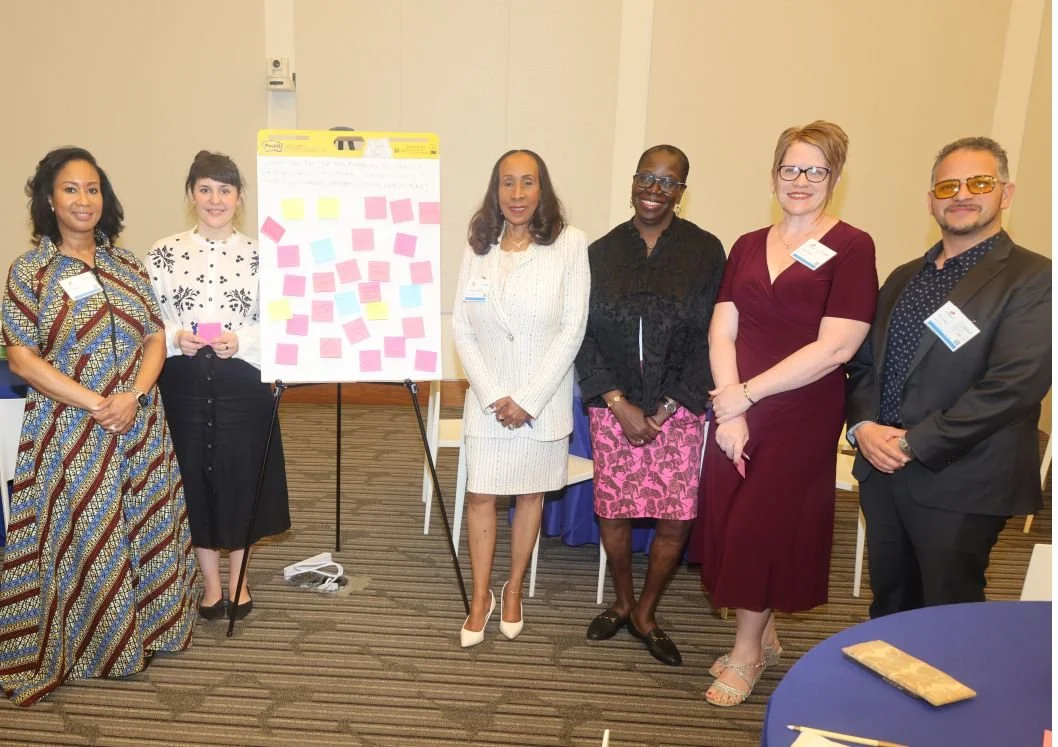
Leaders at the Beyond the Frontiers 2026: The Wealth of Values Conference.
At the Beyond the Frontiers 2026: The Wealth of Values Conference, one of the most provocative sessions came from John Morris, who challenged participants to rethink how global capital markets interact with emerging economies.
His central argument was simple and uncomfortable.
“The world is not short of capital,” Morris told the room. “What we are short of are systems capable of connecting long-term capital with long-term opportunity.”
In a world where global capital markets approach $300 trillion, Morris argued that the real barrier preventing investment in emerging markets is not capital scarcity but system design.
A structural imbalance
Morris pointed to the growing economic dynamism of emerging markets. Many of the fastest-growing economies today are in Africa, and countries such as Guyana have seen extraordinary growth in recent years.
Yet the distribution of global capital tells a very different story.
Emerging markets represent the vast majority of the global population, but most equity ownership remains concentrated in developed markets.
“Ownership, not debt, not grants. Ownership still sits overwhelmingly in developed economies,” Morris said.
In the United States alone, he noted, around 70% of global market capitalization is concentrated in U.S. companies, a 25 year high.
For decades, emerging markets have often been treated as development challenges rather than investment opportunities.
Long-term capital trapped in short-term systems
One of Morris’s most striking insights was the mismatch between the time horizon of capital and the systems used to allocate it.
The largest pools of global capital; pension funds, sovereign wealth funds, insurance companies, and family offices, are inherently long-term investors.
“Sovereign wealth funds invest across generations. Pension funds finance retirements decades away. Family offices think in legacies, not quarters,” Morris said.
Yet the financial architecture around those investors often rewards short-term liquidity and familiar markets.
“The owners of capital think in decades,” he said. “But the systems around them do not.”
When long-term capital is forced through short-term evaluation systems, the result is predictable: investment flows toward the safest and most liquid markets rather than toward emerging opportunities.
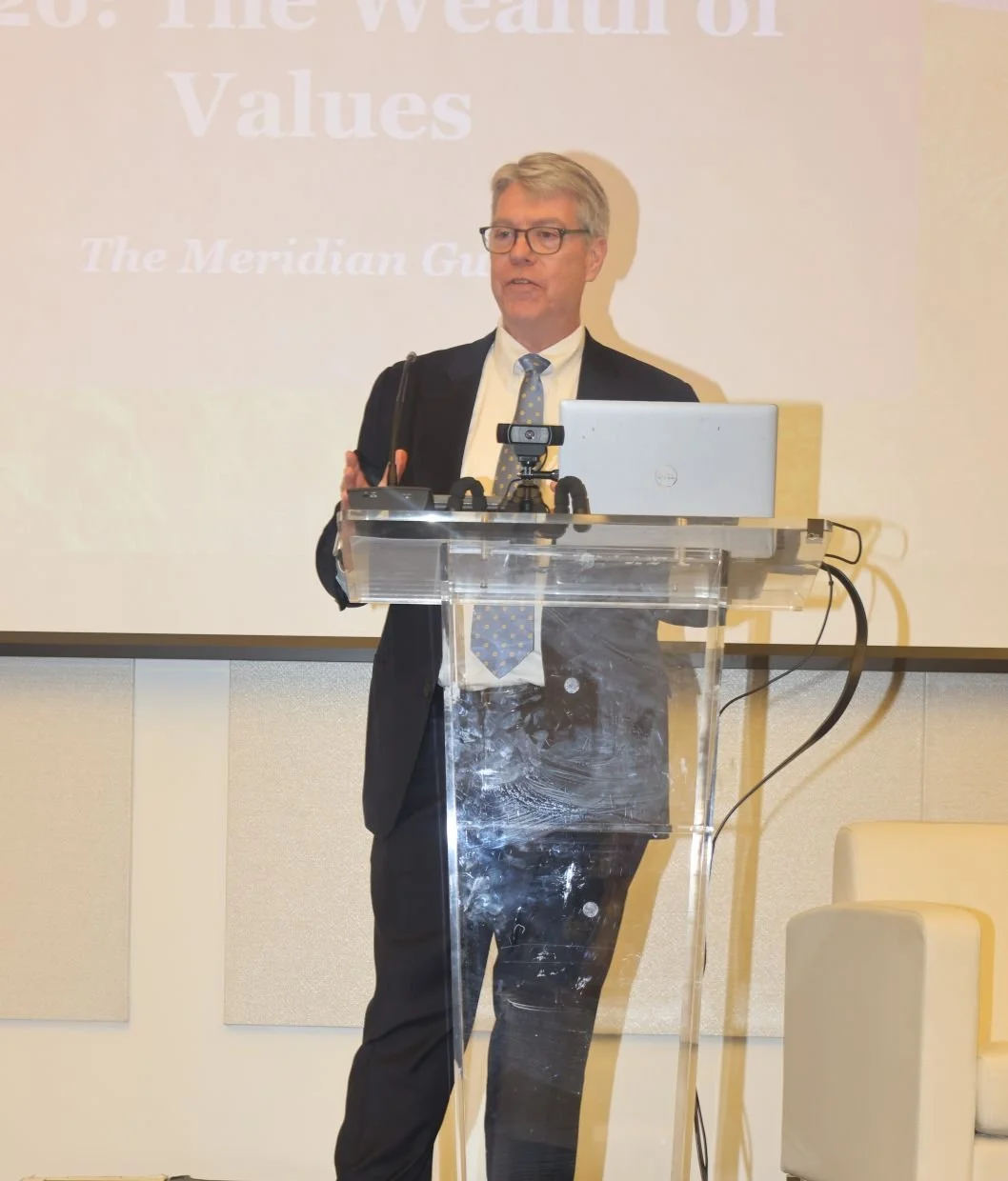
John Morris, Executive ChairmanIntentional Asset Management.
Development finance and private capital: parallel worlds
Morris also reflected on the role of development finance, acknowledging its important achievements in areas such as health systems, education, and economic stabilization.
But he suggested that development capital has not consistently built financial systems capable of attracting large-scale private investment.
At the same time, private capital has often pursued extractive opportunities focused on short-term returns.
“Too often development capital and private capital have operated in parallel universes,” Morris said. “The result has been projects instead of markets and interventions instead of investable ecosystems.”
The challenge, he argued, is to move beyond this divide and build systems that integrate both forms of capital.
Finance as a supply chain
To explain his thinking, Morris offered a different way of understanding financial systems.
Finance, he suggested, should be seen as a supply chain.
“Most people in finance are trained in their silo,” Morris said. “But the supply chain of finance begins with the problem, not with the product.”
That problem might involve food systems, infrastructure, energy access, or entrepreneurship.
From there, the supply chain moves through capital structuring, financial product design, and then marketing through various distribution channels to the appropriate investors.
If any link in that chain breaks, capital never reaches the opportunity.
Morris illustrated this approach through an example from his firm’s work on a Caribbean food systems investment fund.
The project began not with a financial product, but with a structural problem: the region’s dependence on imported food and the economic fragility that comes with it.
In that case, the United Nations acted not as a funder but as what Morris called “the voice of the problem.”
“That distinction matters,” he explained. “They were the beginning of the supply chain, not the source of the solution.”
From there, the investment team developed a private equity structure designed to address food system vulnerabilities and built the appropriate legal and compliance system to deliver competitive returns to appropriate long-term investors.
Why values still matter
But Morris insisted that redesigning financial structures alone will not solve the deeper problem.
Capital markets are not purely technical systems, they are also moral systems.
Drawing on the work of Adam Smith, Morris reminded the audience that Smith wrote The Theory of Moral Sentiments years before publishing The Wealth of Nations.
“Economic systems are not only technical structures,” Morris said. “They also have a moral architecture.”
Without norms of fairness, transparency, and legitimacy, markets drift toward short-termism and concentration of wealth.
“When self-interest becomes detached from moral obligation,” he warned, “markets produce systems that enrich a few while weakening the whole.”
Trust as the invisible infrastructure
The breakout discussions that followed Morris’s remarks repeatedly returned to one concept: trust.
Participants described trust as the “invisible infrastructure” of functioning markets.
Without it, financial innovation alone cannot create durable economic systems.
Trust depends on transparent information, credible institutions, and strong local partnerships.
“Markets that exclude most participants never reach their full potential,” Morris said.
Bridging capital and opportunity
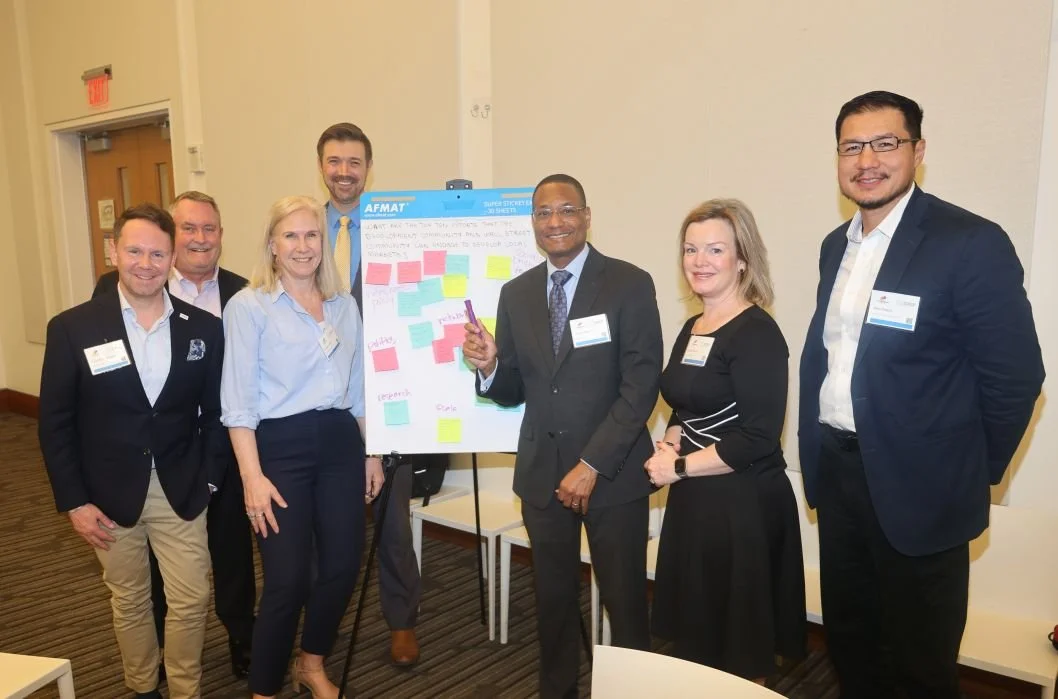
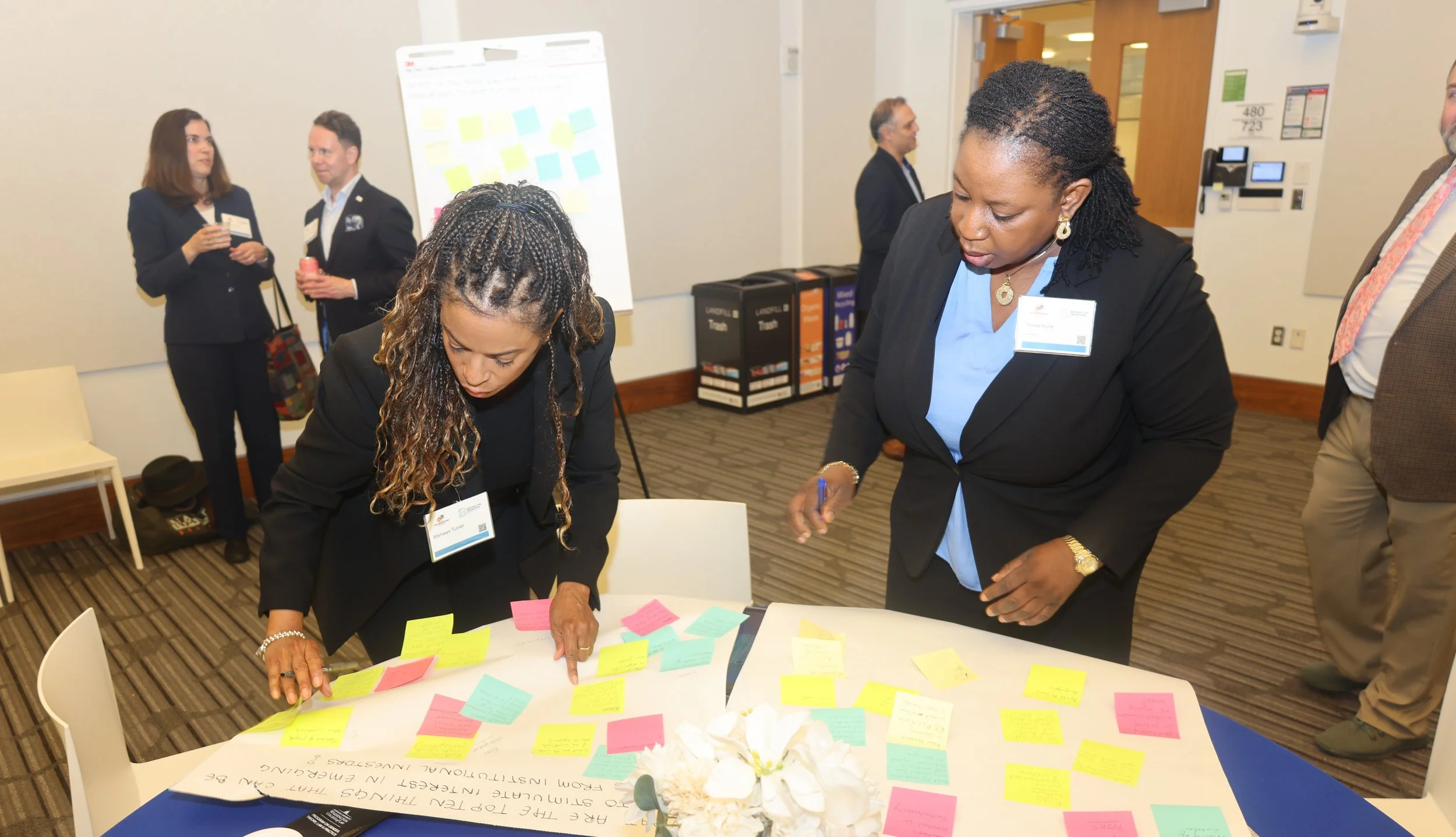
Participants in the breakout sessions explored practical steps for bridging the gap between investors and emerging market opportunities.
They identified barriers including regulatory complexity, tax structures, workforce capacity, and perceived governance risks.
At the same time, many emphasized that these perceptions often overstate risk.
“The more people engage directly with these markets,” one participant observed, “the more they realize the similarities rather than the differences.”
Breakout groups also stressed the importance of capacity building, financial literacy, and local ecosystems.
Entrepreneurs must be able to speak the language of investors, while governments must create stable regulatory environments that encourage long-term investment.
Technology also emerged as a potential bridge, with digital platforms and AI tools offering new ways to connect investors with opportunities.
A moment of choice
For Morris, the message of the session was ultimately about alignment.
Emerging markets represent the fastest-growing share of global economic activity, yet the systems meant to finance that growth remain outdated.
“The opportunity before us is about aligning capital with the future,” he said.
Achieving that alignment will require more than new financial instruments.
It will require new systems, stronger institutions, and values capable of sustaining trust in markets over the long term.
As Morris concluded, the question is no longer whether capital or opportunity exists.
The real question is whether global finance can build the systems needed to bring them together.